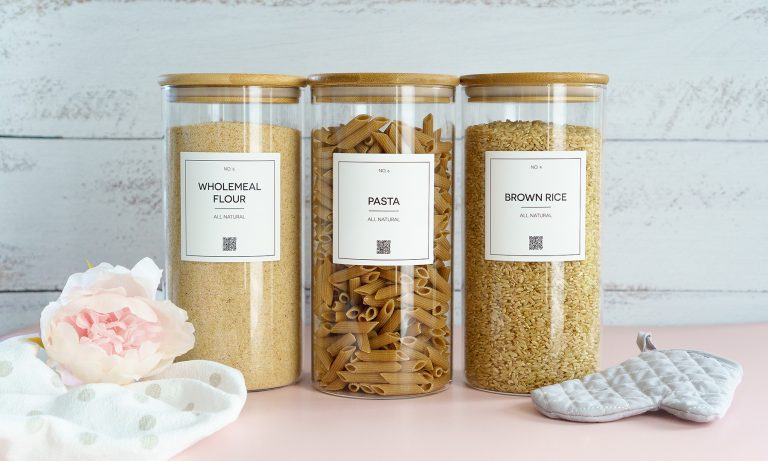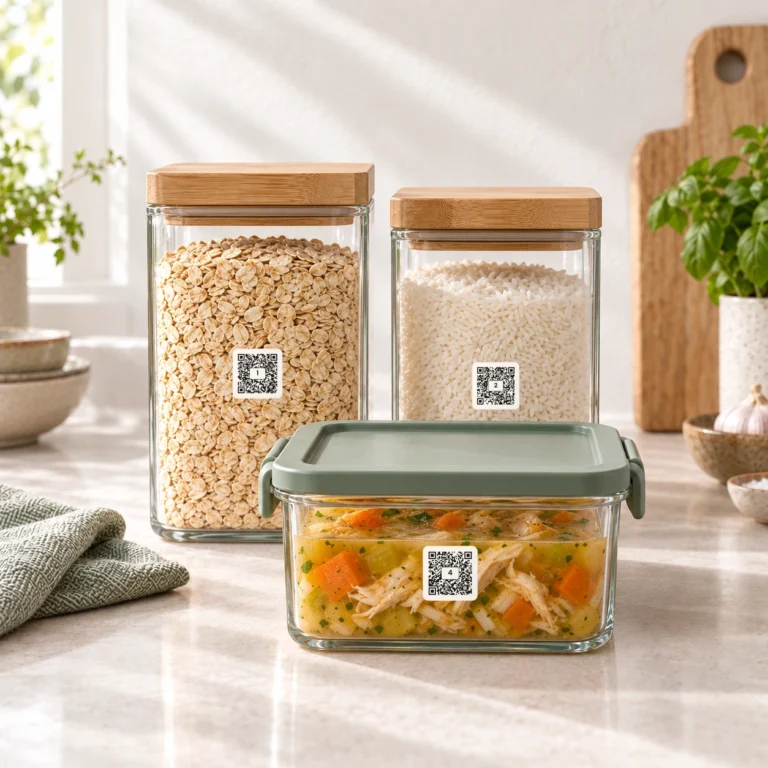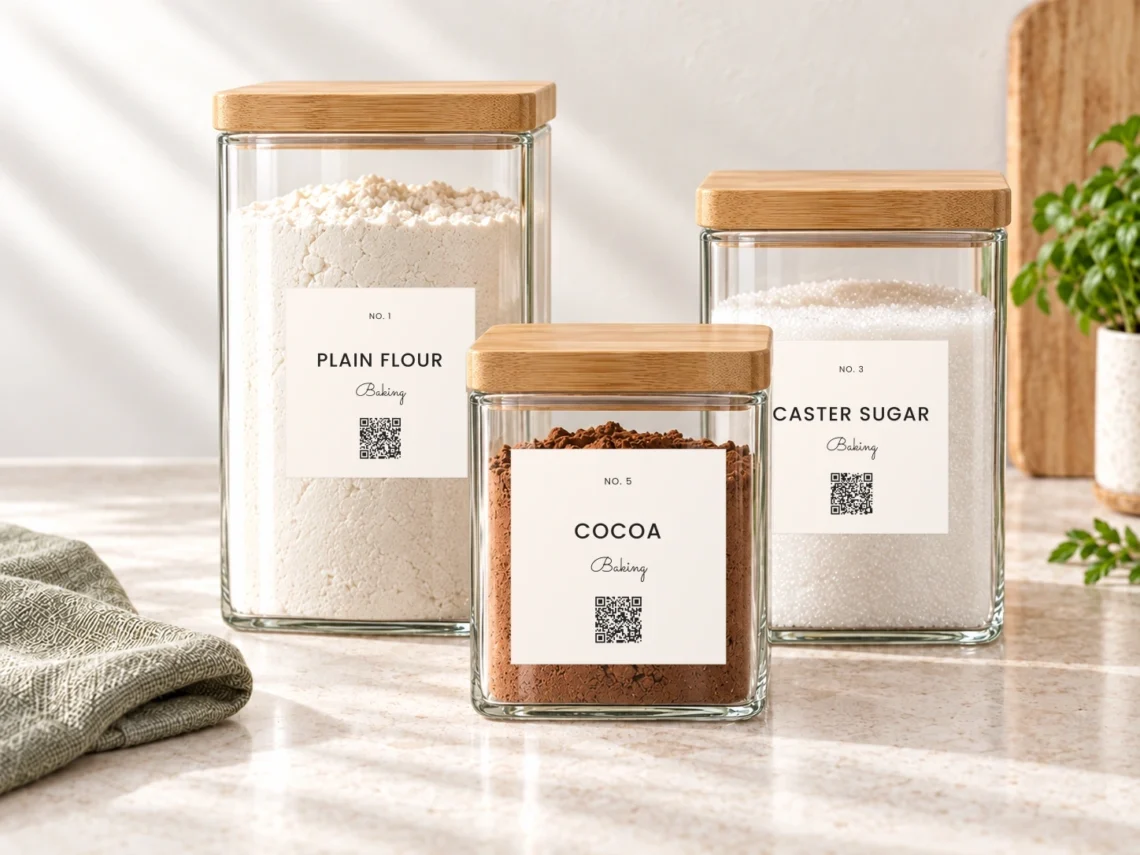
A row of matching jars looks wonderfully settled, with flour in one, rice in the next and no half-open bags trying to escape the shelf. The discarded packaging, though, may have taken the best-before date, cooking ratio and ingredient list with it.
The useful version of pantry organisation keeps those details close. A QR Pantry label gives the jar a way back to its food record, so the information can change whenever the contents do. The jar stays familiar. The record tells you what’s in it now.
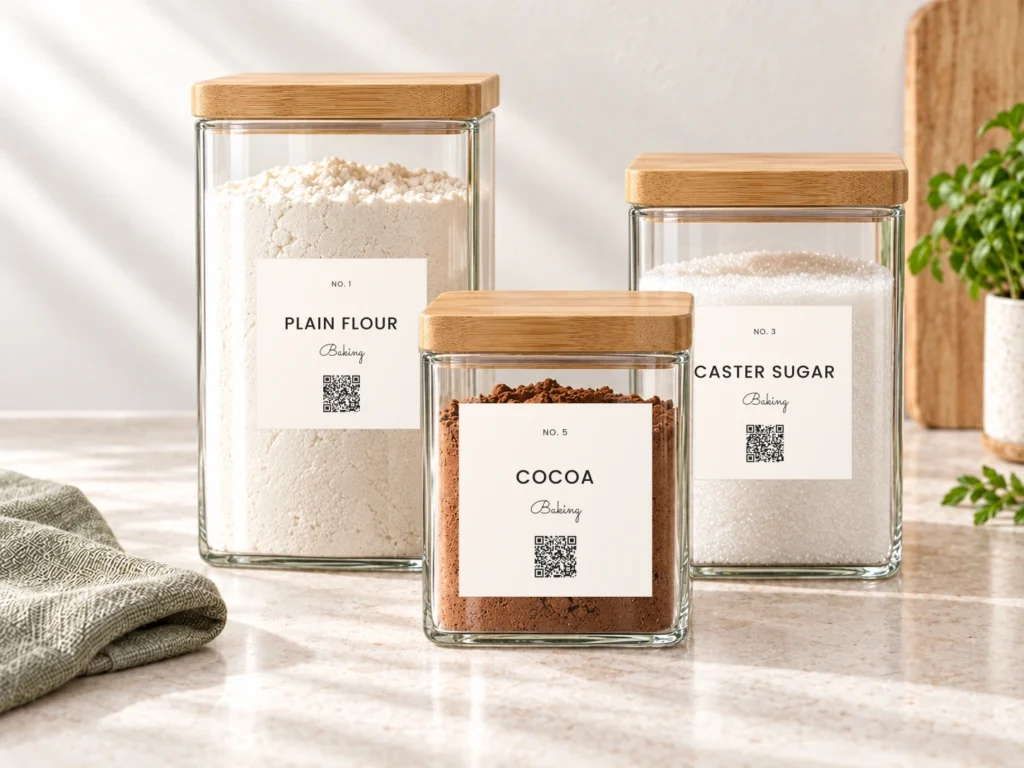
Choose the jars that earn their place
Start with ingredients you reach for often: your usual rice, oats, flour or lentils. You don’t need to rehouse every spice and specialty ingredient on day one. Some foods are more useful in their original packaging, especially when you need its full instructions or allergen information readily available.
Choose food-safe containers suited to their contents, and clean and dry them before filling. Keep pantry storage clean, dry and protected from pests, and follow the pack’s storage instructions. These are among the practical principles in FSANZ’s food storage guidance. A jar’s appearance doesn’t tell you whether it provides appropriate storage.
Leave enough room to use the ingredient comfortably. If a new packet won’t fit, keeping some in its closed original pack is often more sensible than cramming the jar full. Give that spare packet its own place in your inventory so you don’t mistake the jar for your entire supply.
Capture the pack before you empty it
Make this the unhurried part. Read the package and decide what future you will need. A plain ‘Rice’ title can be too vague when one jar holds basmati and another holds arborio. A specific name saves a cooking mistake later without turning the pantry into a filing cabinet.
- The exact food and brand, where useful. ‘Self-raising flour’ and ‘plain flour’ need different records, however similar they look.
- The printed date and its meaning. Keep best-before separate from use-by, rather than treating every date as an identical deadline.
- Storage and opening directions. Copy anything that applies after opening, and note when you opened the packet if it matters.
- Ingredients and allergen information. Preserve the full wording you need, including relevant warnings, rather than summarising from memory.
- Cooking instructions. Water ratios, cooking times or an unusual preparation step are useful notes when the packaging is gone.
QR Pantry gives you notes and a photo on a food item with the free plan. If you have one photo to use, the readable pack information may be more valuable than a portrait of the jar. Pro supports more food images and can read information from a back-of-pack photo. Check any extracted text against the actual packet before relying on it.
Retain the original packaging when it’s needed for a reliable reference, particularly for allergy decisions. The NSW Food Authority advises checking food labels every time you buy a product, because ingredients can change. A saved entry from the previous packet isn’t proof about the current one. An app’s allergen fields or AI reading also aren’t a declaration that a food is safe for someone with an allergy.
Give the jar its reusable identity
Put a QR Pantry label on the container in a position you can scan when it’s on the shelf. For your first fill on the free plan, scan a fresh label and add the food to it. Enter the name, choose the pantry space, add the relevant date and save the pack details you’ve just checked.
If the food already exists in QR Pantry, Pro lets you open that item and choose Pair a QR Pantry label from More. Scan the label to pair it. This is particularly useful after importing a shop: connect the purchase you already recorded to its jar instead of adding it twice.
One label points to one item. Keep that relationship easy to understand. If a large bag becomes two separately stored containers with different histories, give each container its own appropriate record rather than expecting one label to describe both accurately.
For everyday dry staples, an approximate amount can be enough. Keep Quantity and Left in the pack reasonably close to reality; don’t feel obliged to weigh the oats after every breakfast, but do check the physical jar before a recipe that needs a precise amount.
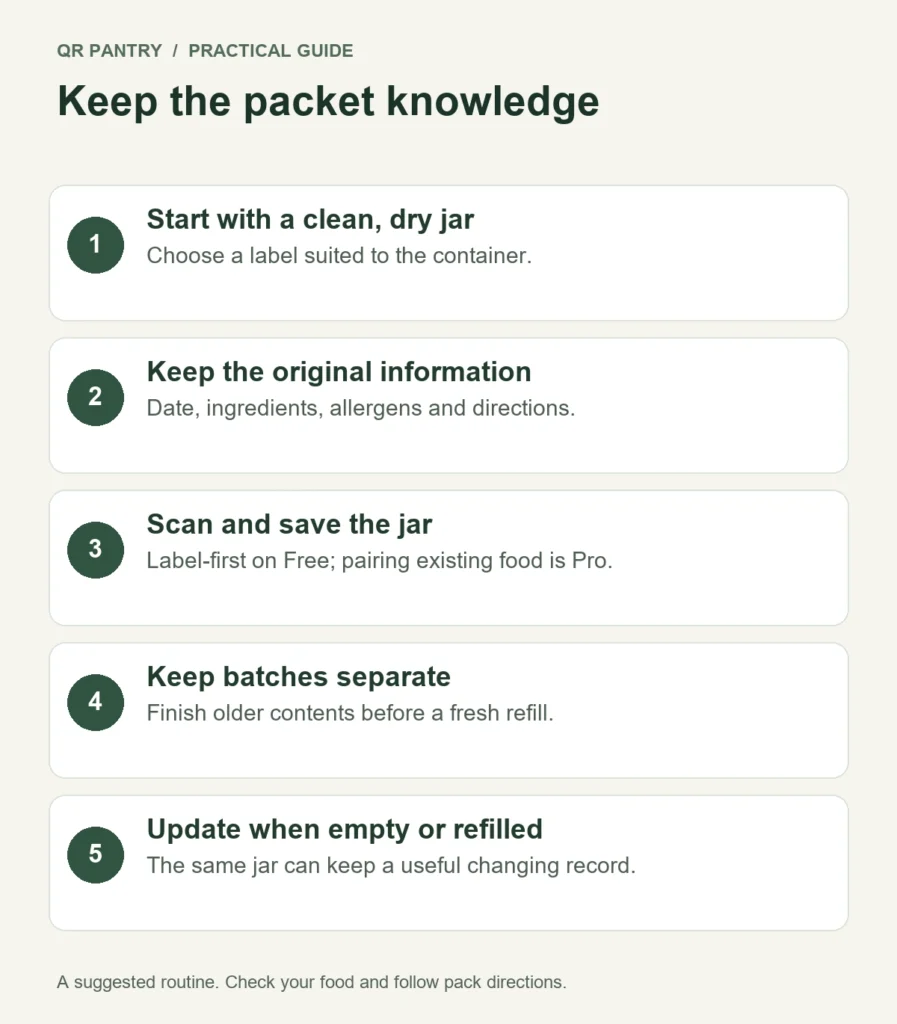
Keep the old batch separate from the new one
The easiest way to lose track of a pantry ingredient is to top up a half-full jar and replace its date with the new packet’s date. The rice at the bottom hasn’t become any newer, and the jar’s record now describes two batches as if they were one.
A clearer habit is to use the existing contents first, then refill. Keep the unopened replacement in its original pack with its own date until you’re ready. If you need both batches open, use a separate container or retain the newer one in its packaging so their dates remain distinguishable.
Decanting doesn’t reset a food’s date. The NSW Food Authority explains that best-before concerns quality, while use-by concerns safety. Follow the pack’s storage and opening directions; don’t eat food after use-by. App dates and estimates never establish safety.
If batches have already been mixed, don’t replace their history with the newest date. Note what happened and preserve the earlier relevant information; if you can’t establish the food’s identity or safe handling, a tidy app entry can’t resolve that uncertainty.
Make the next refill a real update
When the jar runs out, open its item and choose Used up. For a reusable labelled container, choose Keep the label for it so it waits under Empty. Add it to the shopping list if you want to buy more. The same jar is now ready for its next fill.
After cleaning and drying the container, scan its label and choose Refill. Check what’s going in, set the new batch’s date and quantity, and save. The reusable label stays in place. The date belongs to this fill, not the previous one.
Give the rest of the record a quick look as well. Refill isn’t a reason to assume the brand, photos, cooking notes or allergen information still match. Update them from the new packet. If you’re putting an entirely different ingredient in that container, clear the old details that no longer apply before trusting the record.
Leave a visible name on the jar too if that helps people grab the right ingredient without a phone. The QR Pantry label can carry the changing details; the everyday kitchen still needs to make sense at a glance.
Try the routine on one staple you use every week. Capture its packet, fill its jar and complete one refill cycle. You’ll have a pantry habit worth expanding: an orderly shelf with the useful parts of the packaging still attached to the food.