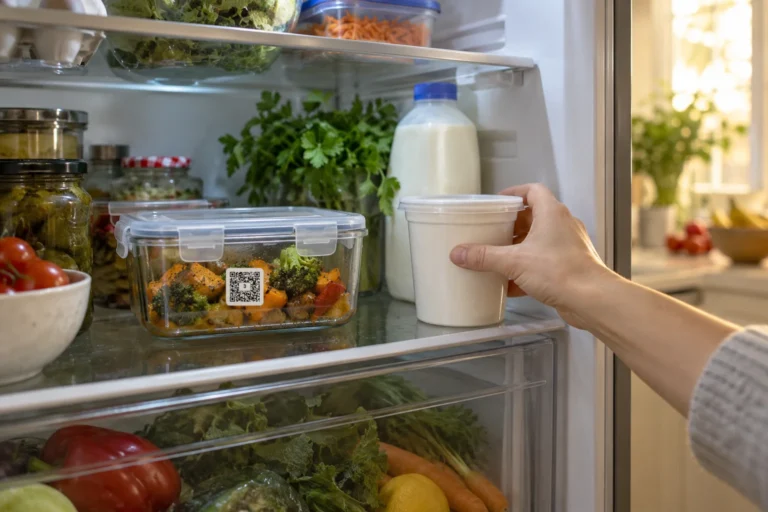
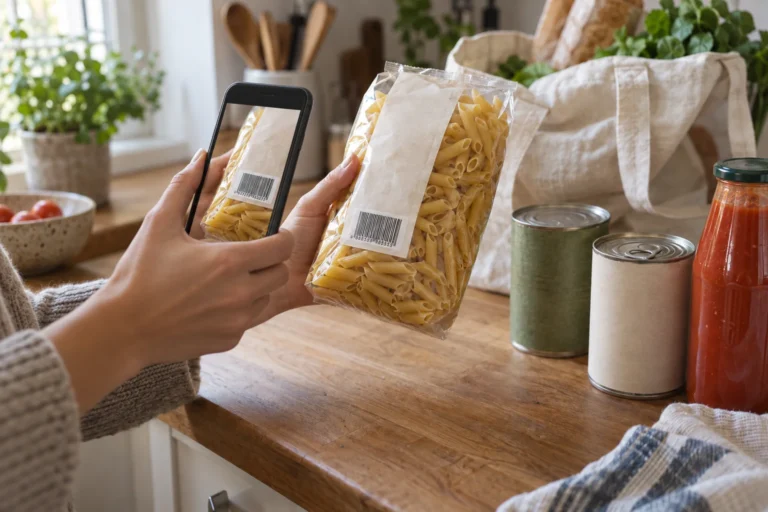
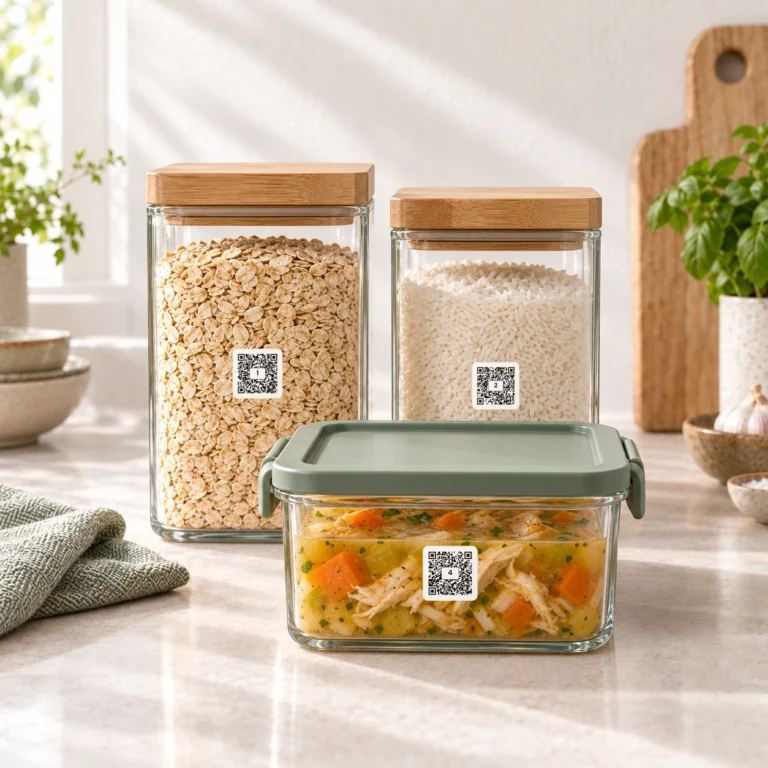
The beans came home in a paper bag. The cheese was cut at the deli, and the roast vegetables are left from dinner. None has a supermarket barcode, yet these are often the foods you most want to remember before the next shop.
They don’t need elaborate records. A familiar name, a place and a few details can be enough to make them useful again. QR Pantry gives those details somewhere to stay, even when the food never arrived in a printed packet.
The name you’d use at dinner time
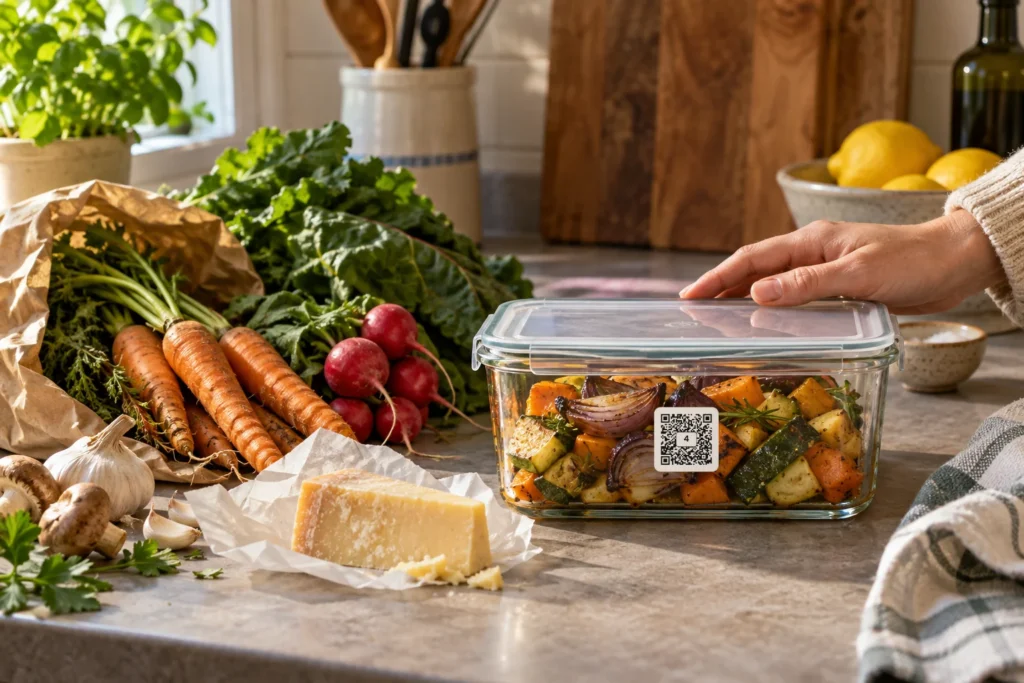
‘Green beans’ is a perfectly useful beginning. For the vegetables, ‘Roast vegetables for two’ tells a different story from ‘Vegetables’: some cooking has already happened, and there may be a ready part of lunch waiting.
That distinction is worth keeping for any prepared dish. Raw chicken, cooked chicken and chicken soup may share an ingredient, but they offer very different possibilities when you’re hungry. A little precision in the name saves working it out again later.
The location and amount add context. A handful of beans in the fridge may finish a meal; a generous portion of vegetables in a container may help begin one. Exact weighing isn’t necessary for every record, although a recipe that needs a precise quantity still calls for a look at the food itself.
The details that came home with it
A barcode would not tell the whole story anyway. Purchase dates, cooking history and advice from a seller are information that comes from the person handling the food.
For deli cheese, the seller’s storage advice and date belong with the record. For a homemade dish, the cooking day and relevant ingredients are useful. A note that says ‘Topping stored separately’ may be just as helpful as the name when someone else gets lunch ready.
Any deli label or receipt with important information is worth keeping. Ingredient and allergen questions need a reliable answer from the label or seller, rather than a guess from appearance. The NSW Food Authority's label-reading advice explains the information to look for.
A photograph can help you recognise it
On Free, QR Pantry lets you save one photo per food item. A picture can distinguish the roast vegetables from several similar containers while the name and notes explain what the picture cannot.
Photo recognition offers another way to begin when it is available within your account’s allowance. It may suggest a useful food name, but the result still needs your knowledge. A photograph of curry may not reveal whether it contains chicken or chickpeas, let alone when it was cooked.
The same distinction matters for dates. Reading a visible date on packaging is different from estimating a storage period. Neither supplies missing handling history. Free has a limited allowance for supported AI tools, while Pro adds capacity and more photo options; a typed entry is still useful when you already know what to save.
A record that fits around putting food away
For a labelled reusable container, scanning its QR Pantry label first creates a natural home for the contents. Loose produce can be recorded without a label, within the account allowance. The record only needs to be detailed enough to help with the next decision.
Food storage comes first. Cold food shouldn’t wait on the bench while a collection of photographs is arranged, and cooked extras need appropriate cooling and storage. An unidentified container found weeks later presents a different question; a new name or date cannot supply the history it has lost.
Later, the food list or a scan of the container can bring back what you saved. The vegetables may cover lunch, while the beans complete a recipe. When either is used, moved or finished, a small update keeps the next check useful. The batch-cooking article explores the same idea with several prepared portions.
The cheese, beans and vegetables never needed barcodes to become part of the kitchen’s picture. They needed a few details saved while those details were easy to remember.