
How to Reduce Food Waste at Home Without Overcomplicating Your Kitchen
Food waste is one of those household problems that feels small in the moment and adds up fast. A container gets pushed to the back of the fridge, a freezer meal loses its label, or you buy something you already had. None of it is carelessness. It’s just hard to keep track of a kitchen.
The good news is that you don’t need a complicated system to waste less. You need a simple way to remember what you already have, where it is and when to use it.
Australia wastes around 7.6 million tonnes of food each year.
About 2.5 million tonnes of that comes from households, and the Australian Government puts the cost to the economy at more than $36.6 billion a year.
Why food gets wasted at home
Most food waste at home doesn’t happen because people are careless. It happens because a normal kitchen is hard to keep track of.
- Leftovers don’t carry a date.
- Freezer meals aren’t labelled clearly.
- Opened packets disappear into the pantry.
- Expiry dates are hidden or forgotten.
- Every meal prep container looks the same.
- You buy things twice because you can’t see what you already have.
- Nobody remembers when something was cooked, opened or frozen.
Most of the time the problem is visibility. If you can see what needs using, you use it. If you can’t, it’s easy to forget it exists.
Start with one habit: label what you store
The easiest place to begin is a rule:
If food goes into a container, it gets a label.
That covers fridge leftovers, freezer meals, meal prep containers, opened pantry packets, dry goods in jars, sauces, dips, kids’ snacks and bulk cooking.
At the least, every label should answer three questions:
- What is it?
- When did I store it?
- When should I use it?
Make the fridge easier to read
The fridge is where food waste happens fastest. Leftovers, opened jars, half-used ingredients and meal prep containers all compete for attention.
Try a simple use first area: one clear container, one shelf or one labelled corner for food that needs eating soon.
When someone asks what there is to eat, the answer is easy: start there.
Stop playing freezer roulette
The freezer is brilliant for reducing waste, right up until it becomes a cold mystery box.
Most of us have pulled out a frozen container and wondered whether it’s soup, curry, sauce, bolognese or something else entirely.
Label every frozen item with:
- Food name
- Date frozen
- Portion size
- Reheating notes
- Allergy or family notes
- A use-first note if it needs one
Check the pantry before you shop
The pantry makes a different kind of waste: buying things twice.
You buy more pasta, flour, rice, oats, snacks or tins because you’ve forgotten what’s already at home. The shelves get cluttered, older food gets pushed to the back, and ingredients expire before they’re used.
Before you shop, quickly check:
- Rice, pasta and grains
- Flour and baking supplies
- Snacks and lunchbox food
- Spices and sauces
- Tins and jars
- Bulk buys
- Backup stock
A simple pantry habit: older items at the front, newer ones behind them, so the older food gets used first.
Track opened dates, not just expiry dates
Expiry dates matter, but they’re not the only useful date.
For a lot of food, the more helpful question is:
When did I open this?
Opened sauces, dips, snacks, baking supplies, grains, frozen meals and leftovers all get harder to keep track of once they’re out of their packaging or in a container.
An opened date or a stored date gives you the context. It tells you what to use first and what needs checking.
Keep the cooking notes with the food
Food waste isn’t always about dates. Sometimes food sits unused because you can’t remember what to do with it.
That jar of lentils, rice, quinoa, oats or specialty flour might be perfectly fine, but if you always have to look up the ratio, it gets easier to ignore.
Keep the details you always look up:
- Rice-to-water ratio
- Cooking time
- Reheating instructions
- Recipe ideas
- Allergy notes
- Family preferences
- Brand or size
Use smart labels when a normal label isn’t enough
A normal label is good at one thing: saying what something is. Food storage usually needs more than a name.
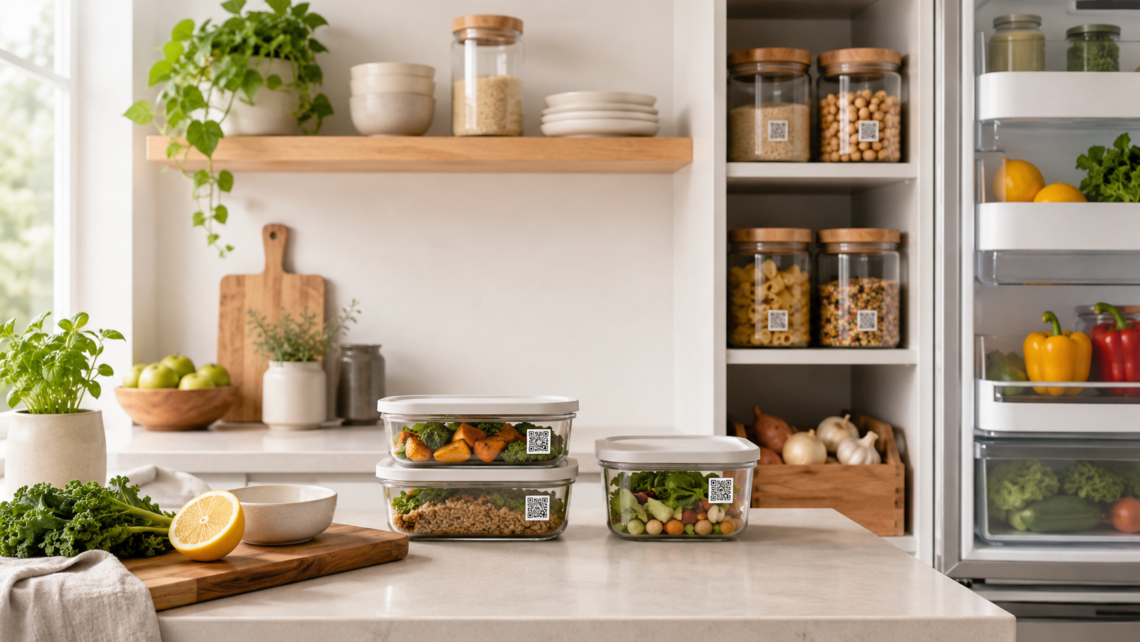
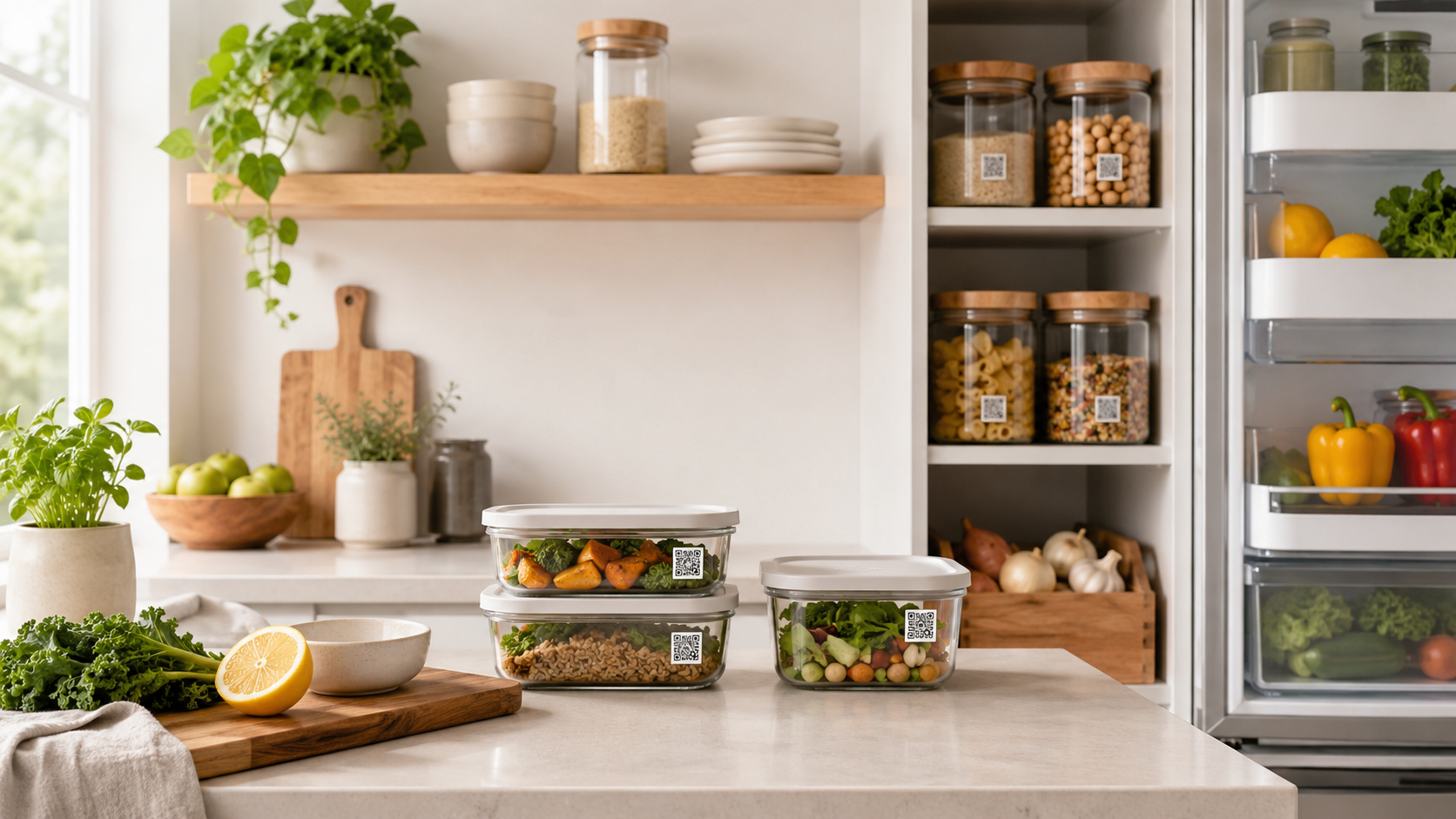
With QR Pantry, a label connects the container to the details on your phone: what it is, where it lives, the expiry and opened dates, cooking notes, a place on the shopping list and a push reminder before it needs using. Email reminders and one-tap store links are part of Pro.
Instead of squeezing everything onto a small sticker, you scan the label and see the details behind it.
Make “use what we have” a weekly habit
Reducing food waste gets much easier once it’s part of the routine.
- Check what’s open in the fridge.
- Look for leftovers that need eating.
- Find the oldest freezer meals.
- Check pantry items close to their date.
- Use fresh produce before buying more.
- Check what you already have before you write a shopping list.
You don’t need a full kitchen audit. A quick look before the next shop stops the double-buying and reminds you what needs using.
A simple food waste reset you can do today
1. Check the fridge
Move anything that needs eating soon into one visible area.
2. Label the leftovers
Add the name and the stored date to every container.
3. Check the freezer
Find anything unknown, old or unlabelled.
4. Pick three meals to use first
Choose food you already have before planning new meals.
5. Check the pantry before shopping
Look for duplicates, opened packets and anything close to its date.
6. Start labelling properly from today
Every new container gets a label before it goes into the fridge, freezer or pantry.
One last thing
Reducing food waste at home doesn’t take a perfectly organised kitchen. You don’t need to overhaul every shelf, buy every container or build a spreadsheet.
You just need a way to remember the food you already have.
Start with labels. Add dates. Make a use-first area. Check the pantry before you shop. Keep the useful notes where you’ll actually find them.
Make food storage easier to keep track of.
Start with QR Pantry smart labels and know what’s inside, when it was stored and when to use it.
Shop Smart Labels